

I am about to butcher a food analogy. You have been warned.
A fellow legal innovator, Anna Guo made a smart point recently: most lawyers will use AI the way most people use grocery stores. Why forage for your own food when someone’s already done the work?
I get the instinct. But I think the analogy lands in the wrong place. So I’m going to replace it with a different food analogy and stretch it until it snaps.
Here’s what I actually think is happening:
The frontier models (Claude, GPT, Gemini) are the grocery store. Raw ingredients. Available to anyone. Remarkably good ingredients, honestly. Better every month.
The legal tech vendors selling you prepackaged AI tools? Those are restaurants. Solid restaurants, some of them. But you sit down, you eat what’s on the menu, and you go home. You didn’t cook anything. You don’t know how. And if the restaurant closes, raises prices, or decides salmon is off the menu this quarter, you’re stuck.
Now here’s where I really commit to this bit.
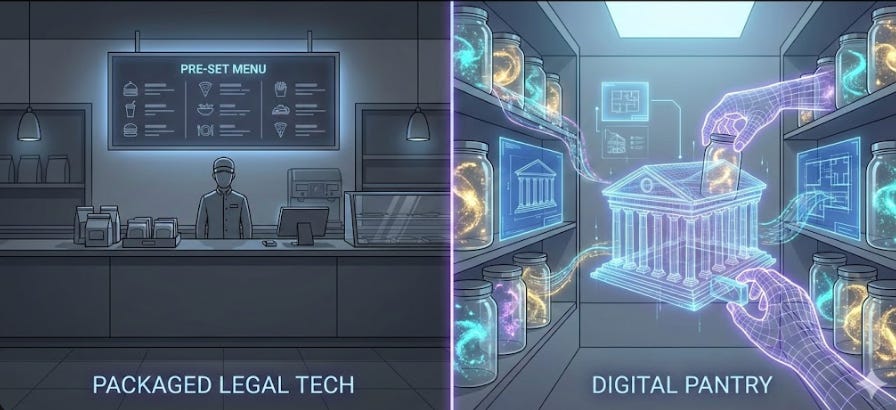
Humanity did not stop cooking at home when restaurants got good.
The opposite happened. Food blogs became the single most lucrative blog niche. YouTube cooking channels became the platform’s 4th largest content category. Farmers markets grew five-fold. During COVID, yeast purchases spiked 647% in a single week and flour couldn’t stay on shelves. People didn’t just keep cooking. They went deeper: fermentation, sourdough, charcuterie, fresh pasta.
And the restaurant industry also grew to $1.5 trillion.
It was never a zero-sum game. Better restaurants inspired better home cooks. Better home cooks became more adventurous restaurant customers. The whole ecosystem expanded.
So that same cooking flywheel is spinning up in law right now. For one simple reason.
Building things rewires your brain
This is the part that matters most, and the part most people skip past.
People don’t cook at home only to save money. They do it because it changes how they relate to their life.
Researchers mapped cooking behavior onto a well-being framework and found that making your own food activates all five dimensions of human flourishing: positive emotion, engagement (genuine flow states), relationships, meaning, and accomplishment. Cooking interventions consistently increase confidence and improve general and mental health measures. UC Berkeley’s Greater Good Science Center put it plainly: cooking is an act of empowerment because it provides control, nurtures confidence, and builds autonomy.
They also documented something called the “I made it myself” effect. People consistently rate self-prepared meals higher than objectively similar meals made by others. Not because the food is better. Because they built it.
That same rewiring is what happens when a lawyer stops buying prepackaged tools and starts building their own. And I don’t mean “doing it manually.” I mean cooking.

Here’s what usually happens:
It’s 9:43 p.m. One screen still on.
Partner wants a risk memo in the morning. Client changed one clause. Again.
You open the vendor tool. It has a workflow for “standard risk memo.” You paste the clause, click generate, and get something... fine. Not your fine. Generic fine. You start patching it, sentence by sentence. You can’t change the structure without breaking the tool’s logic. You can’t swap in your client’s definitions cleanly. You can’t reuse the fix next time without doing this dance again.
You ship it anyway, tired and slightly annoyed.
Same night, different move. You open the frontier model with your own small set of saved building blocks. Your clause library is already tagged. Your playbook is already outlined. Your prompt pulls the right definitions, compares to your fallback positions, drafts the memo in your voice. You change one instruction, rerun the same recipe, and the whole memo updates consistently. You ship it, then you keep the recipe. Next time is cheaper.
The second lawyer didn’t just get a better memo. They learned something. They saw how the model reasons about risk clauses. They understood what prompts surface which edge cases. They iterated until the recipe matched the exact way their practice thinks about liability. Every rep compounded their understanding.
The tool got better because the lawyer got better. The lawyer got better because the tool revealed new patterns.
That’s the difference between a home chef and a restaurant customer. The home chef has skills that transfer, compound, and adapt. The restaurant customer has a reservation.
When you only eat vendor outputs, you inherit their defaults
Think about what you’re actually accepting when you click “generate” inside a prepackaged tool:
Their definition of what “good drafting” means
Their opinion on what sources count
Their preferred structure
Their blind spots on edge cases
And oh by the way, you are teaching them a better recipe.
When you cook, you can be opinionated. You can adapt. You can make exactly what the matter needs, even when the matter is weird. Especially when the matter is weird.
This isn’t theoretical. It’s already happening.
On February 3, 2026, Anthropic launched a legal plugin for Claude. Within six trading days, $830 billion in market value evaporated from software and services stocks. Thomson Reuters fell 16%. RELX dropped 15%. Wolters Kluwer fell 13%.
The market read this as a threat to legal tech vendors. That framing is mostly wrong, and it misses the real story.
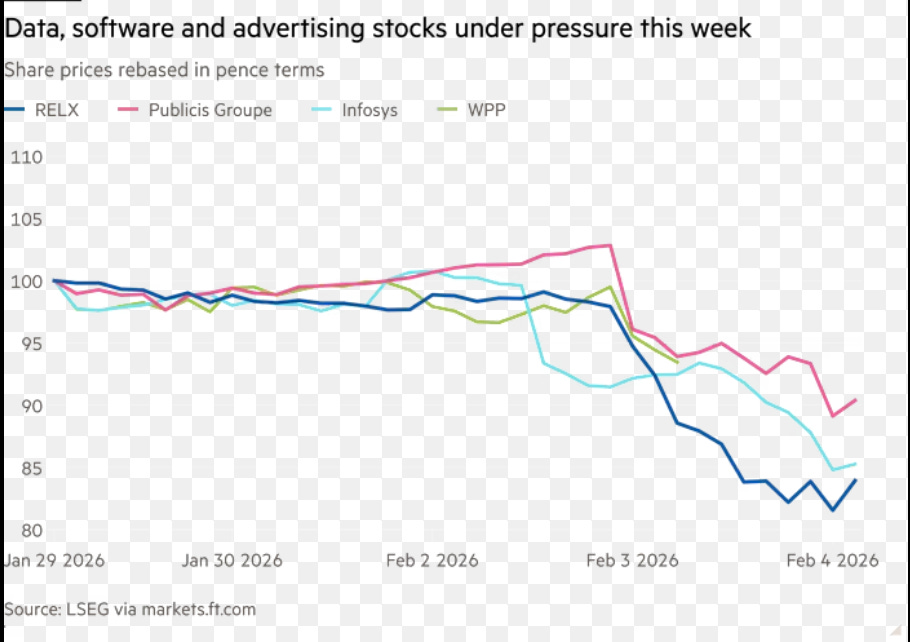
The real story is what lawyers are doing with the raw ingredients.
Jamie Tso, a senior associate at Clifford Chance in Hong Kong, vibe-coded a range of legal AI tools that replicate capabilities offered by major legal tech companies. His LinkedIn post sharing the work sparked what Artificial Lawyer called “a movement.” His GitHub repos have been forked over 100 times. He started a group chat of lawyers who call themselves “legal quants.”
Tso’s trajectory is the home chef trajectory. He started experimenting with no-code tools his firm made available. Hit the limits. Taught himself to code on weekends. Now he’s exploring concepts like contract simulation, spawning AI personas to simulate clause disputes before signing. His vision: just-in-time, disposable software built to solve a specific pain point, then replaced when the workflow changes.
He’s not the only one. The National Law Review ran “Why Smart Lawyers Are Building AI Tools Instead of Buying Them,” noting that vibe-coded tools encode lawyer judgment directly rather than imposing predefined structures. Linklaters identified 400+ potential AI use cases through internal innovation groups. Jordan Bryan’s newsletter “The Redline” published “The Future of Legal Tech Will Be Built by Lawyers.”
Duquesne’s Kline School of Law captured the identity shift best: when law students use pre-existing legal tech, they are consumers of a finished product. When they learn to build, they transition from consumers to creators. They become the architect of the system.
The new kitchen
The grocery store now comes with appliances.
MCP (Model Context Protocol) is the farmers market: high-quality raw materials, universally accessible, with thousands of community-built connectors to the tools lawyers already use. Claude Code is the well-equipped kitchen. Plugins are the specialty tools: the stand mixer, the pasta roller, the fermentation crock.
And the restaurants aren’t going anywhere. Harvey AI raised at an $8 billion valuation. CoCounsel just crossed one million users. Complex, mission-critical legal work will continue to need industrial-grade platforms, just like complex meals still send people to great restaurants.
But the ecosystem is expanding. The lawyers who learn to shop at the grocery store, who understand what ingredients exist, how to combine them, how to iterate on their own recipes, those lawyers will have something no prepackaged tool gives them: control over what they’re making. And that control compounds.
There’s a reason people kept baking sourdough after lockdown ended. It wasn’t about the bread. It was about what making the bread did to them. It rewired how they thought about food, ingredients, process, craft.
Building your own legal tools does the same thing to how you think about law.
I warned you about the analogy. You stayed anyway. That means you’re probably one of them.
One move: write one “house recipe” for a recurring work product this week. A risk memo template, a clause fallback workflow, a diligence summary prompt. Save it. Reuse it twice before you let yourself touch a vendor template. See what you learn about how the work actually works.
Subscribe to PossibLaw. Substack. Podcast. Tools to become a builder.